
Knowledge Center / Entering the U.S. Market / South Africa
Supporting Guide
Entering the U.S. market from South Africa.
A commercial briefing for established South African brands evaluating U.S. retail expansion.
Your home market is not the U.S. market
South African brands bring market-specific product strengths, but U.S. retail requires a South African-specific proposition, economics and operating plan.
Start with the U.S. retail channels overview to compare realistic routes to market before selecting an entry plan.
South Africa has its own consumer, channel and supply context; the United States spans national chains, regional grocery, specialty, drug, mass, marketplaces and independents.
South African provenance can inform the proposition but cannot replace a U.S. answer on classification, shelf price, inventory and account ownership.
Translate South African requirements into a U.S. review
South African products may follow South African home-market and category requirements; those requirements do not automatically establish U.S. compliance.
Review U.S. classification, formulation, ingredients, claims, allergens, label panels, serving information and net quantity.
Resolve product classification, formulation, claims and labeling before production is committed for the U.S. market. For broader context, read the FDA compliance pillar guide and the market-entry and compliance service overview.
Rebuild pricing around the full U.S. margin stack
A rand retail price cannot simply be converted to dollars. Model South Africa-to-U.S. ocean or air freight, duties, U.S. warehousing, distribution, retailer margin and launch support.
Model each layer before buyer outreach
- South Africa-to-U.S. ocean or air freight, duties and customs clearance
- U.S. warehousing, storage and fulfillment
- Distribution and representation costs where applicable
- Retailer margin and account deductions
- Promotions, launch support and trade spend
If the landed cost cannot support the required margin stack at a competitive shelf price, change the channel, pack, assortment or cost structure before presenting the brand. The U.S. retail pricing guide provides the broader framework.
Use hero SKUs to create a clear first decision
Lead with South African SKUs whose use case, differentiation, margin and supply are clearest in the U.S.
Use a focused assortment matched to the first channel and shopper.
The first U.S. retail channel guide explains how to choose for fit rather than exposure.
Make U.S. operations part of the proposition
Define exporter, importer, insurance, south africa-to-u.s. ocean or air freight, U.S. inventory, replenishment and returns before outreach.
Long-distance or cross-border logistics make documentation, lead times and safety stock part of the buyer conversation.
Why buyers can reject a good South African product
A buyer can value a South African product and still decline an unfinished U.S. system. Common rejection points include:
The South African proposition is not translated
The package, claims, shelf price and channel story do not make one clear U.S. proposition.
The inventory answer is unclear
The brand cannot explain south africa-to-u.s. ocean or air freight, inventory, lead time and account service.
Launch support is unclear
The placement request is not matched by a credible awareness and repeat-purchase plan.
South Africa support and trade considerations
South African Department of Trade, Industry and Competition provides official South African export and trade information. Programs and eligibility can change; confirm current terms directly with the agency.
Official starting points
- South African Department of Trade, Industry and Competition — official export and trade information.
- USITC Harmonized Tariff Schedule — classification research reference.
- CBP tariff classification — U.S. Customs and Border Protection guidance.
Programs, eligibility and availability can change; confirm current terms directly with the relevant agency. These links are navigation, not a funding representation.
A realistic first year is sequenced
Many U.S. retailers work to category-review and reset calendars. Missing the relevant window can delay the next opportunity, so build backward from buyer timing rather than rushing a shipment forward.
- Readiness phase: U.S. classification, claims, package decisions and rand-to-dollar pricing.
- Operating phase: export and import planning, freight, insurance, warehousing and inventory cover.
- Commercial phase: targeted buyer outreach, category timing, launch support and sell-through measurement.
The first year should establish a repeatable U.S. operating system and credible commercial evidence. It should not be measured only by how many doors are opened.
U.S.-based execution
Your Team on the Ground in the United States
For international brands, TruLife serves as an extension of your team in the U.S. — helping navigate retail expectations, buyer relationships, positioning, compliance, logistics and commercialization.
International brands do not have to navigate the U.S. retail market from thousands of miles away. TruLife provides an experienced U.S.-based team working directly within the market.
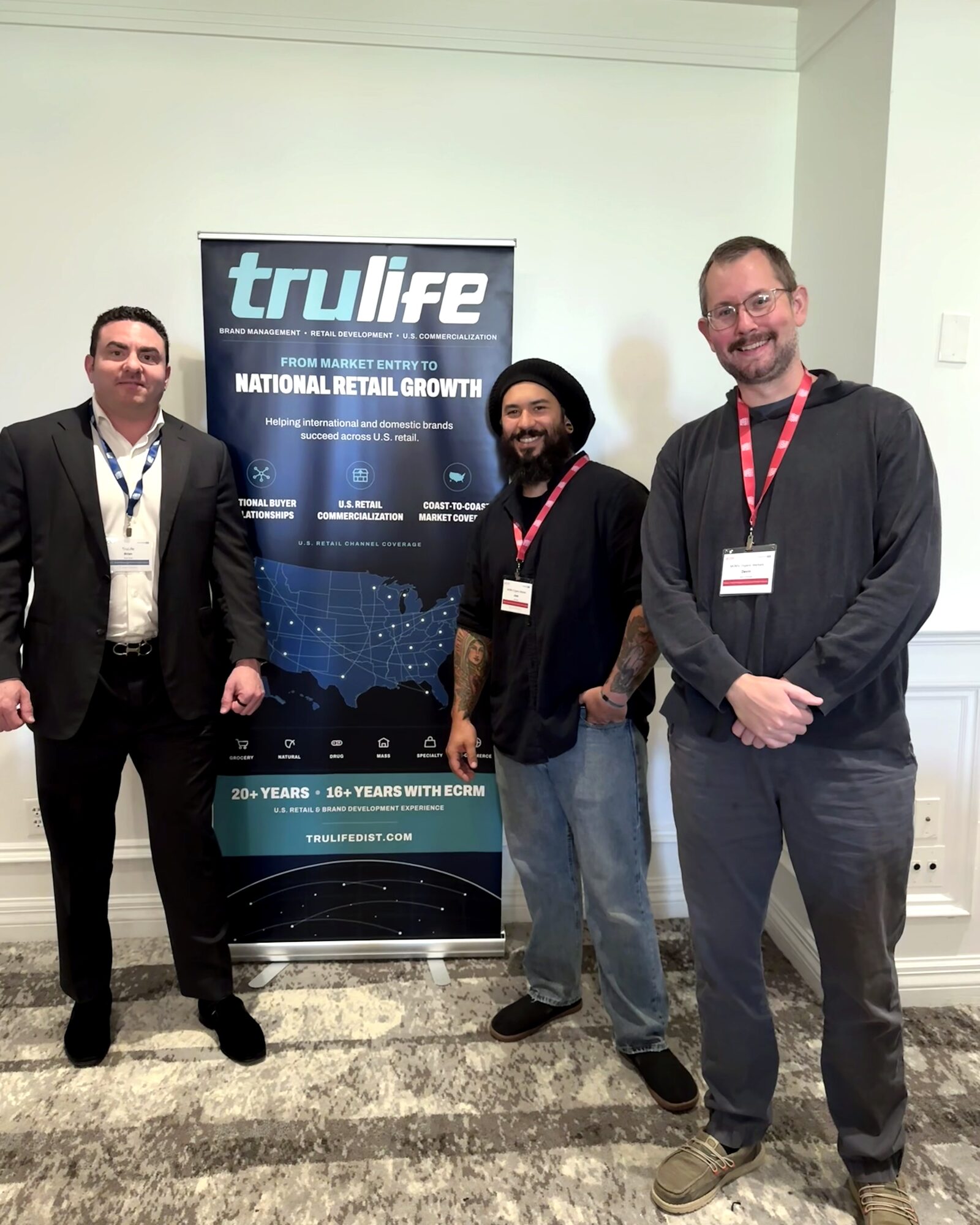
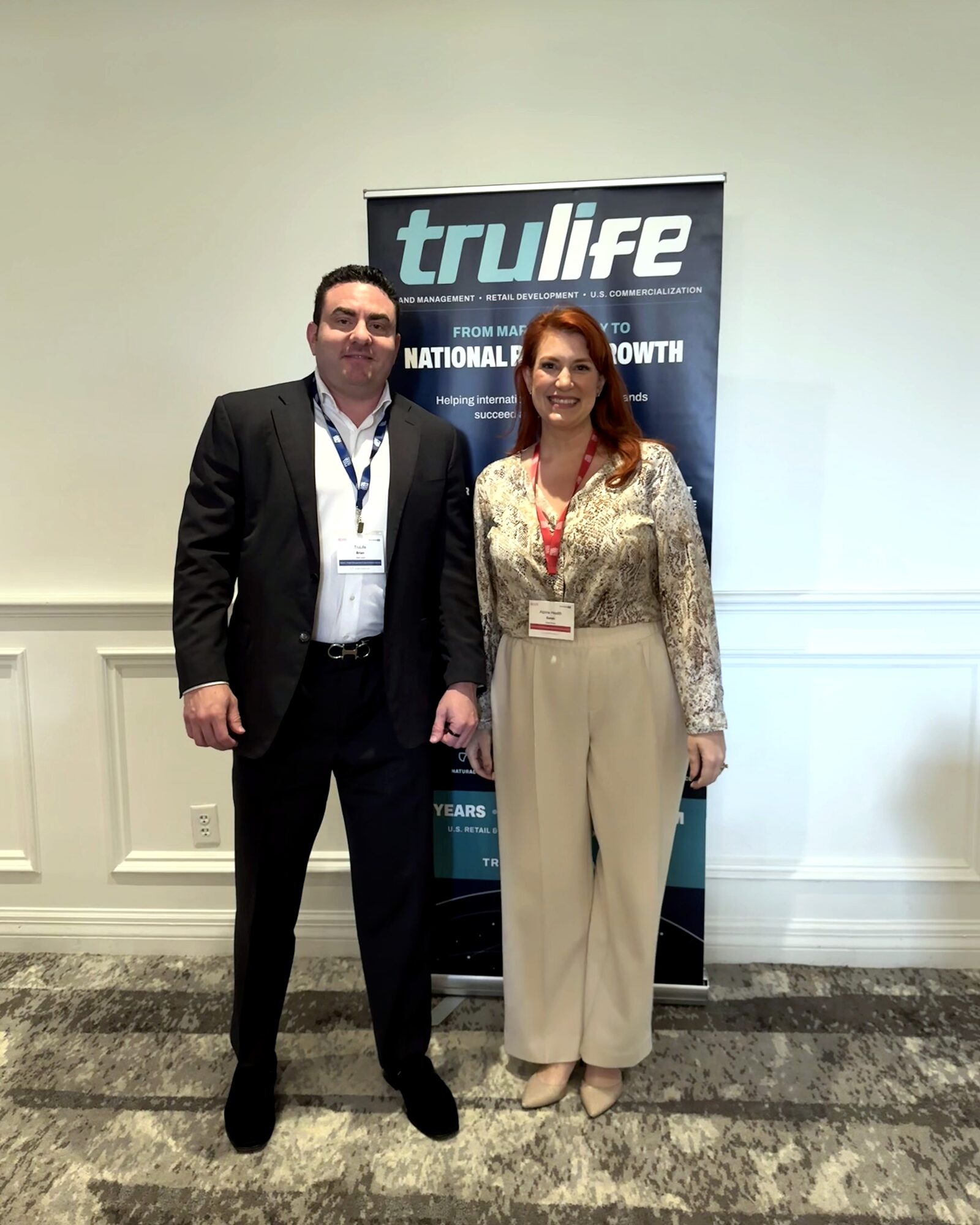
Buyer access is only the beginning. TruLife manages the preparation, commercial requirements and follow-through needed to move a retail conversation toward an actual business opportunity.
See How TruLife Develops U.S. Retail Accounts →Retailer names and photographs are shown to document TruLife Distribution’s participation in scheduled buyer meetings. Meetings do not imply retailer endorsement, purchase commitment or guaranteed placement.
Is Your Brand Ready to Meet U.S. Retail?
TruLife helps emerging and international brands prepare for, access and execute opportunities across the U.S. retail market.
Choose your next step
Map the U.S. path
Use the market-entry learning path if you are still deciding what must change.
Open the path →Identify the gaps
Use the free readiness assessment to organize the commercial questions before outreach.
Assess readiness →Request a written evaluation
Use the market assessment when product, economics and operating inputs are ready for review.
Request assessment →How TruLife supports South African brands
South African Department of Trade, Industry and Competition provides official South African export and trade information. Programs and eligibility can change; confirm current terms directly with the agency.
The objective is one accountable U.S. commercial function from preparation through retail development, with distribution used where it supports the plan rather than treated as the entire strategy.
Entering the U.S. from overseas? TruLife coordinates market readiness, regulatory preparation, importation, fulfillment and buyer development as part of a commercial operating plan.
Explore U.S. Market Entry → Explore Our Retail Growth Brief (PDF)
Choose the right starting point
Finished product? Request an analyst-led written commercial evaluation. Still developing your product? Start with Brand Advisory. The free readiness self-assessment is available as a supporting tool.
Summary
South African U.S. expansion requires U.S. classification, a rand-to-shelf model, focused SKUs, dependable operations and buyer timing.
Frequently asked questions
Does South African packaging need to change for the U.S. market?
South African packaging should not be assumed to meet U.S. requirements; changes depend on classification, formulation, ingredients, claims, allergens and label panels.
Why can U.S. retailers reject strong South African brands?
Unclear channel fit, logistics, margin, inventory and sell-through support can prevent a launch.
Can a rand retail price simply be converted to dollars?
No. Rebuild pricing through south africa-to-u.s. ocean or air freight, duties, U.S. warehousing, distribution, retailer margin and trade spend.
General commercial information only; requirements vary by product classification, formulation, claims and intended use. This is not legal, regulatory, tax or financial advice.
Continue Learning
Next: FDA compliance for U.S. market entry
Related guides
Your U.S. Headquarters for Retail Commercialization
Turn South African strengths into a U.S. retail plan.
TruLife helps established South African brands build a U.S. retail development plan buyers and operators can act on.