
Category Fit & Differentiation
Does your product bring incremental value to the shelf, or is it just another "me-too" item? Buyers want to know why consumers will choose you over established players.
U.S. Market Entry
One U.S. Market. Very Different Retail Channels.
TruLife helps qualified brands navigate multiple U.S. retail channels. But each channel has vastly different buyer expectations, margin structures, velocity requirements, and onboarding processes.
Before you present your brand, you need to know the fundamentals that buyers commonly evaluate.
Does your product bring incremental value to the shelf, or is it just another "me-too" item? Buyers want to know why consumers will choose you over established players.
Your MSRP must make sense for the channel's target demographic while allowing for adequate wholesale and retailer margins. Pricing structure is critical to retail viability.
Placement is only step one. Buyers demand proof that your product will turn on the shelf, backed by robust marketing support and promotional plans.
Can you fulfill orders reliably? Buyers evaluate your inventory availability, regulatory compliance, and logistics capabilities before committing.
TruLife presents client brands to buyers and retail organizations across the entire U.S. retail landscape.
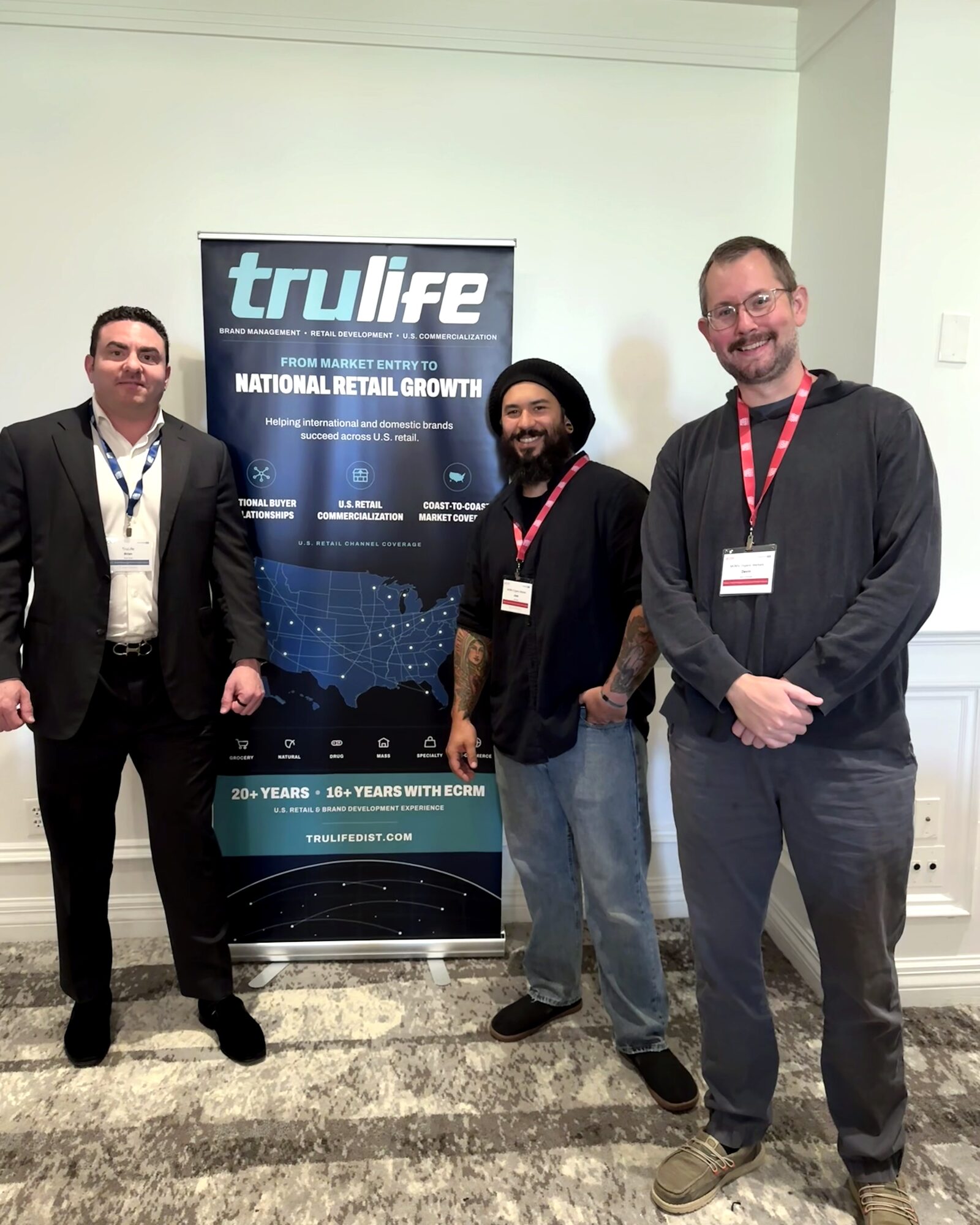
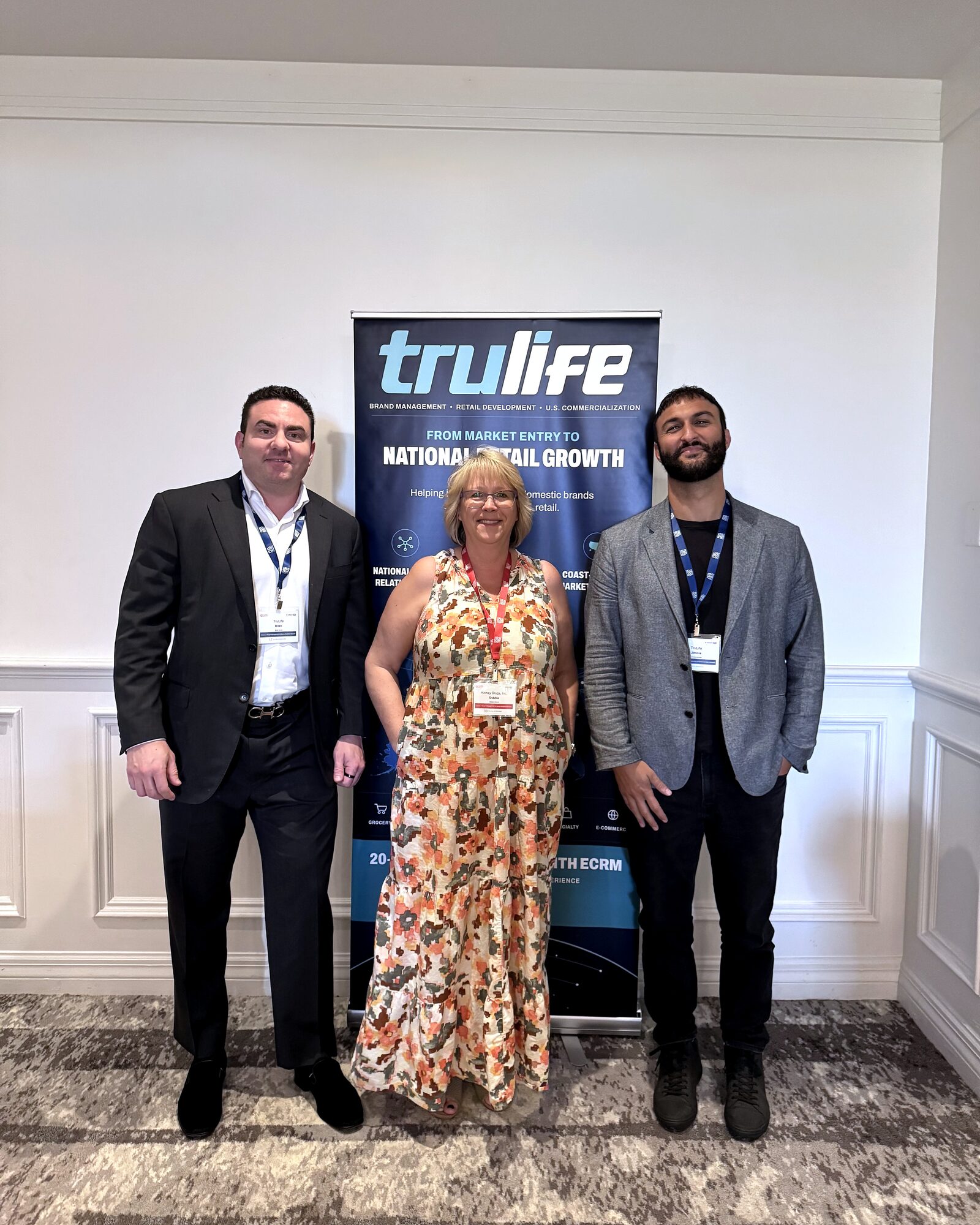

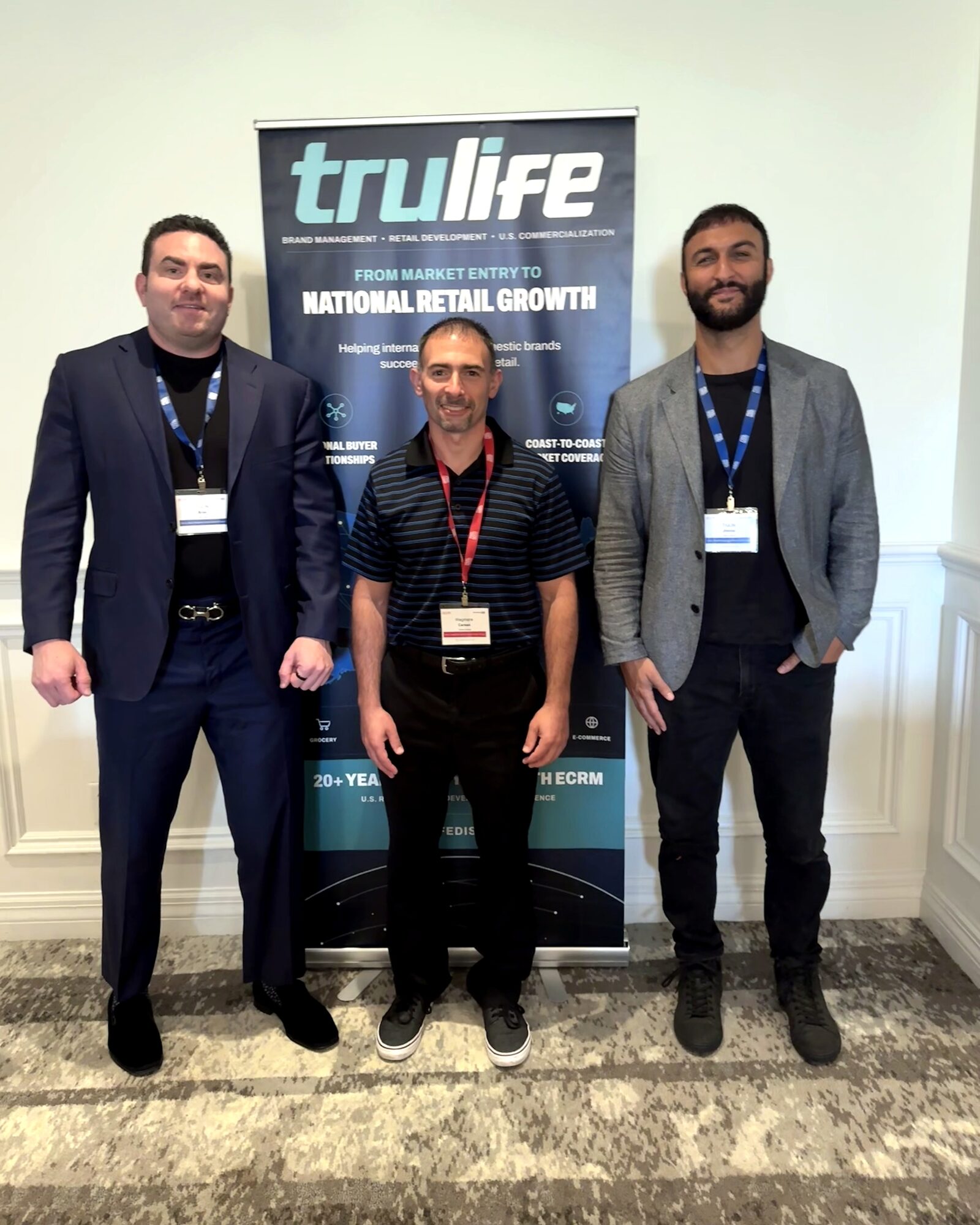
Retailer names and photographs are shown to document TruLife Distribution’s participation in scheduled buyer meetings. Meetings do not imply retailer endorsement, purchase commitment, or guaranteed placement.
A common mistake is assuming that massive reach is always the best strategy. Approaching mass retail too early, or expanding into channels without the required promotional budget, can severely damage a brand's reputation and profitability. TruLife helps determine exactly where your brand should start instead of simply promising access everywhere.
A systematic nine-step process to enter the U.S. market successfully.
Assessing compliance, packaging, and supply-chain foundation.
Identifying the primary, secondary, and tertiary targets.
Building the margin architecture from MSRP down to landed cost.
Crafting a compelling narrative tailored to category managers.
Scheduling targeted meetings and formal presentations.
Managing the critical post-meeting engagement phase.
Setting up EDI, vendor portals, and distribution pathways.
Aligning promotions, field marketing, and broker networks.
Driving continuous velocity to secure long-term shelf space.
Independent health food stores, regional natural chains, and co-ops. This environment attracts highly educated shoppers looking for clean ingredients, novel formulations, and premium products.
Ingredient integrity, strict certifications (Organic, Non-GMO, Vegan), unique brand stories, and tight alignment with the specific ethos of their shopper base.
Often requires higher retailer margins to account for lower foot traffic, offset by premium MSRPs. Promotional budgets are heavily focused on in-store education and demo programs.
Failing to invest in store-level education and staff training, expecting the product to sell itself based purely on label claims without community support.
We leverage our established relationships with natural buyers, focusing the brand narrative on ingredient quality and category innovation while managing the localized distribution strategies required.
National and large regional supermarket chains where consumers handle their weekly shopping. Health and wellness aisles in grocery are expanding rapidly as conventional shoppers seek better-for-you alternatives.
Broad consumer appeal, well-structured promotional calendars, trade spend capabilities, and the proven ability to drive high-velocity turns on crowded shelves.
Requires significant trade spend, free-fill allowances, and mandatory promotional participation. Volume is high, but margins are tightly squeezed by both distributor and retailer requirements.
Underestimating the required trade marketing budget and failing to realize that slotting fees or free-fills are often just the baseline cost of entry.
We structure realistic promotional calendars, negotiate vendor agreements, and identify specific grocery partners whose demographic profiles precisely match the brand’s target consumer.
National and regional pharmacy chains focused on OTC health, personal care, and convenience wellness. Consumers visit these stores specifically to solve immediate health problems.
Clinical backing, easily recognizable health benefits, compact packaging that fits rigid planograms, and strong gross margins. Trust and reliability are paramount.
Demands aggressive promotional cadences (BOGO, loyalty programs) to drive turns. Retailer margin expectations are high to offset smaller overall store footprints.
Submitting overly bulky packaging that doesn't fit standard pharmacy planograms, or lacking the budget to meaningfully participate in the retailer's proprietary loyalty programs.
We guide necessary packaging adaptations for drug planograms and prepare compelling clinical and functional narratives specifically tailored for pharmacy category managers.
The largest big-box retailers dominating the U.S. landscape. This channel offers massive volume potential but is generally reserved for mature brands with proven, undeniable track records.
Demonstrated sales velocity in other channels, bulletproof supply chain capabilities, absolute lowest landed costs, and massive national marketing support.
Operates on the philosophy of everyday low pricing. Margins are extremely tight, and brands must rely on sheer volume to generate profit. EDI compliance and stringent chargeback rules apply.
Approaching mass too early before establishing brand awareness, resulting in poor sell-through, heavy markdowns, and severe financial penalties for supply chain failures.
We assess true readiness for mass, manage the intense onboarding and compliance processes, and act as a protective barrier ensuring you don't over-commit before you are truly ready.
Membership warehouses focusing on extreme value, bulk sizing, and limited, highly curated SKUs. A high-stakes, fast-paced environment with rapid inventory turnover.
Perceived member value, unique packaging formats (multi-packs, bonus sizes), and the ability to drive massive volume during limited rotational periods (in-and-out programs).
Incredibly slim margins per unit, offset by monumental volume. Packaging costs can be surprisingly high due to specialized bulk formats and structural pallet displays.
Failing to design structural, pallet-ready displays or offering standard retail sizes that do not provide clear, undeniable dollar value to the club member.
We consult on club-specific packaging, calculate the specialized landed cost requirements, and present the compelling value proposition that club buyers demand.
Major online marketplaces like Amazon, Walmart Marketplace, and specialized wellness dot-coms. Often the critical first touchpoint for consumers discovering a new brand before they buy in-store.
Search volume, conversion rates, review velocity, robust fulfillment capabilities (FBA, WFS), and sophisticated digital advertising strategies.
Platform fees, fulfillment costs, and necessary advertising spend (PPC) define the margin structure. Pricing must be carefully managed to avoid channel conflict with brick-and-mortar retail.
Allowing unauthorized third-party sellers to tank their pricing online, thereby destroying relationships with physical retailers who demand strict price parity.
We execute marketplace launches, manage complex Walmart Marketplace onboarding, and ensure your digital pricing architecture protects your broader U.S. retail strategy.
Mid-sized grocery and pharmacy chains dominant in specific geographic areas. These retailers often command fierce local loyalty and serve as excellent testing grounds for national expansion.
Alignment with local consumer preferences, agility in promotional planning, and the brand's ability to drive focused, regional marketing initiatives.
More flexible than national mass or grocery, allowing for customized localized promotions. Specialized distributor relationships are often required to service these regional DC networks efficiently.
Ignoring regional powerhouses in favor of national long-shots, missing out on profitable, highly manageable growth opportunities that build the foundation for national scale.
We identify the right regional targets based on demographic data, secure meetings with localized buying teams, and build a phased, manageable rollout strategy.
The network of national and regional distributors required to physically move your product into thousands of retail doors. Without distribution, broad physical retail access is often impossible.
Guaranteed retailer demand (pre-orders), sufficient margin allowance, and comprehensive brand support to ensure the product doesn't just sit in their warehouse.
Distributors require specific margins (often 15-25%+) on top of the retailer's margin, plus catalog fees, marketing programs, and free-fill allowances.
Assuming a distributor will act as a dedicated sales team. Distributors fulfill demand; they do not create it. Furthermore, pricing architecture often fails to account for distributor margins, resulting in a loss on every unit sold.
We leverage our distribution network connections, negotiate wholesale agreements, and drive the direct retail demand required to keep distributor reorders flowing steadily.
See how we execute across channels.
Stop guessing. Start executing with data-driven channel strategy.
A commercial first step
Understand the opportunity before committing to inventory, compliance, logistics and retail development. Still developing? Explore Brand Advisory →