
Channel fit
What this channel is—and what belongs there
The strongest fit is a product with a clear reason to exist: a distinctive format, meaningful ingredient standard, credible sourcing, a useful certification or an underserved consumer need. Packaging must explain that difference quickly without making claims the evidence cannot support.
Specialty shoppers may accept a premium price when the product, proof and experience justify it. Buyers still need an assortment that is understandable, commercially viable and appropriate for their particular community. An independent store, a regional natural chain and a larger specialty account can require different pack sizes, education and fulfillment.
Buyer checklist
What to prepare before outreach
- Compliant label and substantiation for every material product claim
- Concise sell sheet, wholesale price list, case pack and shelf-life details
- Ingredient, allergen and certification documentation relevant to the category
- A credible store-level education, sampling and promotional plan
- A fulfillment route that can serve independents or the chosen distributor without stockouts
Commercial reality
Build economics around the actual route
Model the full route from landed product cost to wholesale and shelf price. Allow for a retailer and, where needed, a distributor layer, as well as freight, samples, promotions, returns or damages and the cost of educating stores. The right structure varies by account and product; there is no universal margin percentage. A high MSRP does not repair weak unit economics, and distributor availability does not by itself create store demand.
Avoidable gaps
Common mistakes in natural & specialty
- Treating natural retail as a logo list rather than choosing accounts whose shoppers match the product
- Overloading the label with trend language while underinvesting in evidence and staff education
- Entering distribution before there is an account plan and resources to support sell-through
- Launching too many SKUs instead of giving a focused opening assortment a clear job
Launch and measurement
Plan beyond the first order
A useful launch plan separates account acquisition from store activation. For acquisition, define the target retailer profile, category review timing, sample process and person responsible for follow-up. For activation, decide how shoppers and staff will learn about the item, how promotions will be funded and how out-of-stocks or slow stores will be identified. The second plan should exist before the first order.
Measure more than initial sell-in. Track doors authorized, doors actually stocked, on-shelf availability, reorder timing, promotion response and feedback from staff or shoppers where available. Review the results by account and geography before adding SKUs or distribution. Specialty retail can be a valuable learning environment when the brand responds to evidence rather than treating every new door as the same.
How TruLife helps
From readiness through sell-through
TruLife reviews channel readiness, label and claims issues, landed economics and opening assortment. We sharpen the buyer story around category incrementality, prepare materials and samples, identify appropriate accounts, coordinate outreach and follow-up, and help plan importer, warehouse and distributor requirements. After an opportunity advances, the work can extend to onboarding, launch marketing, account communication and sell-through review. Buyers decide whether to list a product; TruLife does not guarantee acceptance or placement.
Meeting context
A relevant scheduled buyer meeting
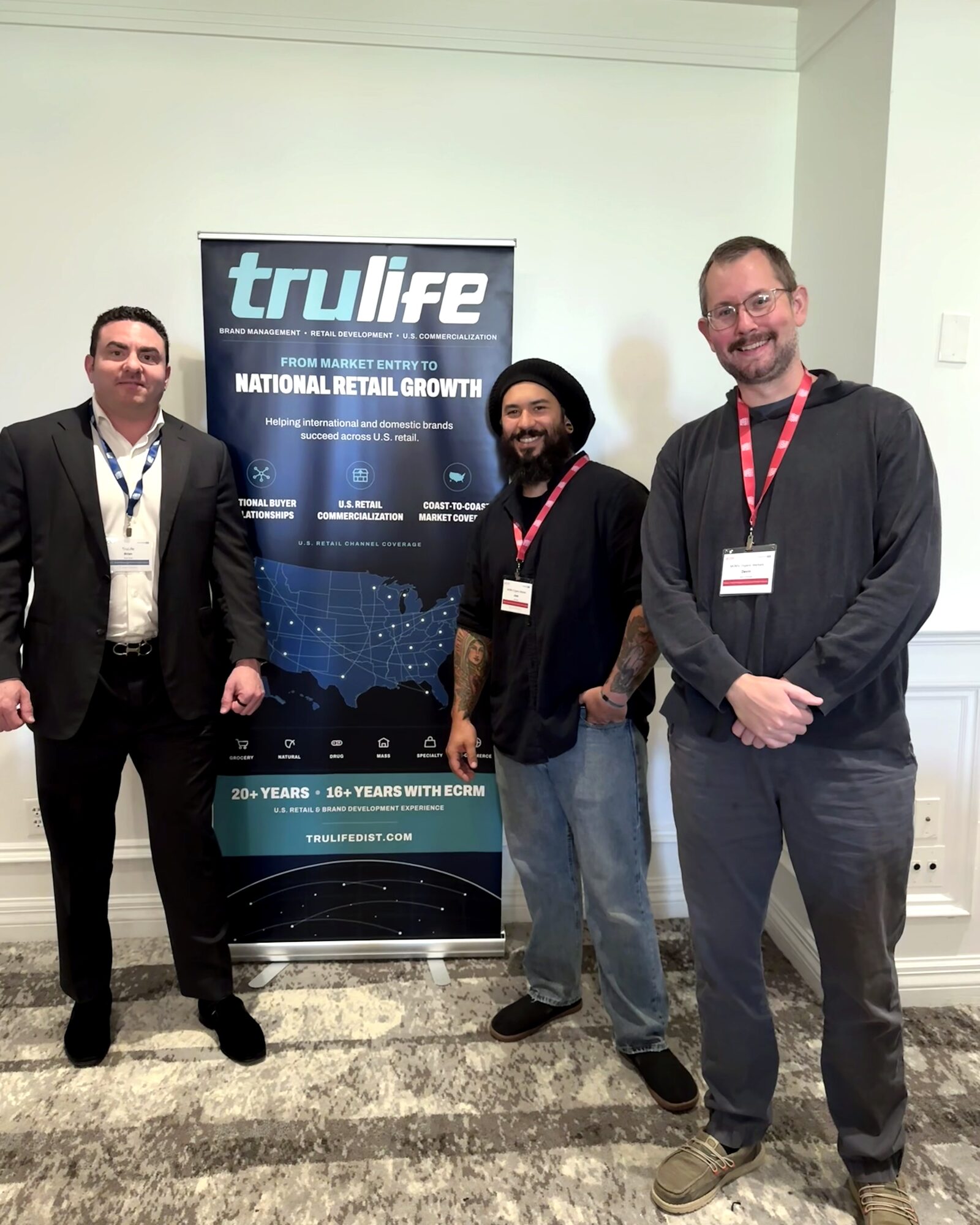
MOM’s Organic Market is shown as evidence of a scheduled buyer meeting relevant to natural retail.
Disclosure: Retailer names and photographs document TruLife Distribution’s participation in scheduled buyer meetings. Meetings do not imply retailer endorsement, purchase commitment or guaranteed placement.
Next steps
Turn channel interest into a decision
Start by deciding whether specialty retail is the best first channel, not merely an available one. Document the consumer, the shelf problem solved, the opening SKUs, landed economics and twelve months of support. Then compare that plan with grocery, regional retail and distributor-led routes before committing inventory.
Frequently asked questions
Natural & Specialty FAQs
Do I need a natural-products distributor before approaching stores?
Not always. Some accounts can buy direct and others require an approved distributor. Confirm the target account’s route first; a distributor listing is not a retailer purchase order.
Are organic, vegan or non-GMO certifications required?
Requirements vary by category and retailer. Certifications can strengthen fit when relevant, but they do not replace compliant labels, differentiated positioning or demand.
Can a new international brand begin in specialty retail?
Potentially, if U.S. compliance, importation, inventory, insurance, pricing and local support are ready. A focused regional or independent launch may be more manageable than immediate broad distribution.
What should a buyer presentation emphasize?
Explain the shopper, category gap, product evidence, retail price, opening assortment, operational readiness and specific plan for generating repeat purchase.